Overview | FAQ | Annual Report | Financials
GrowNYC is a hands-on non-profit which improves New York City’s quality of life through environmental programs that transform communities block by block and empower all New Yorkers to secure a clean and healthy environment for future generations.
For nearly 40 years, GrowNYC has been rolling up its sleeves alongside NYC residents to:
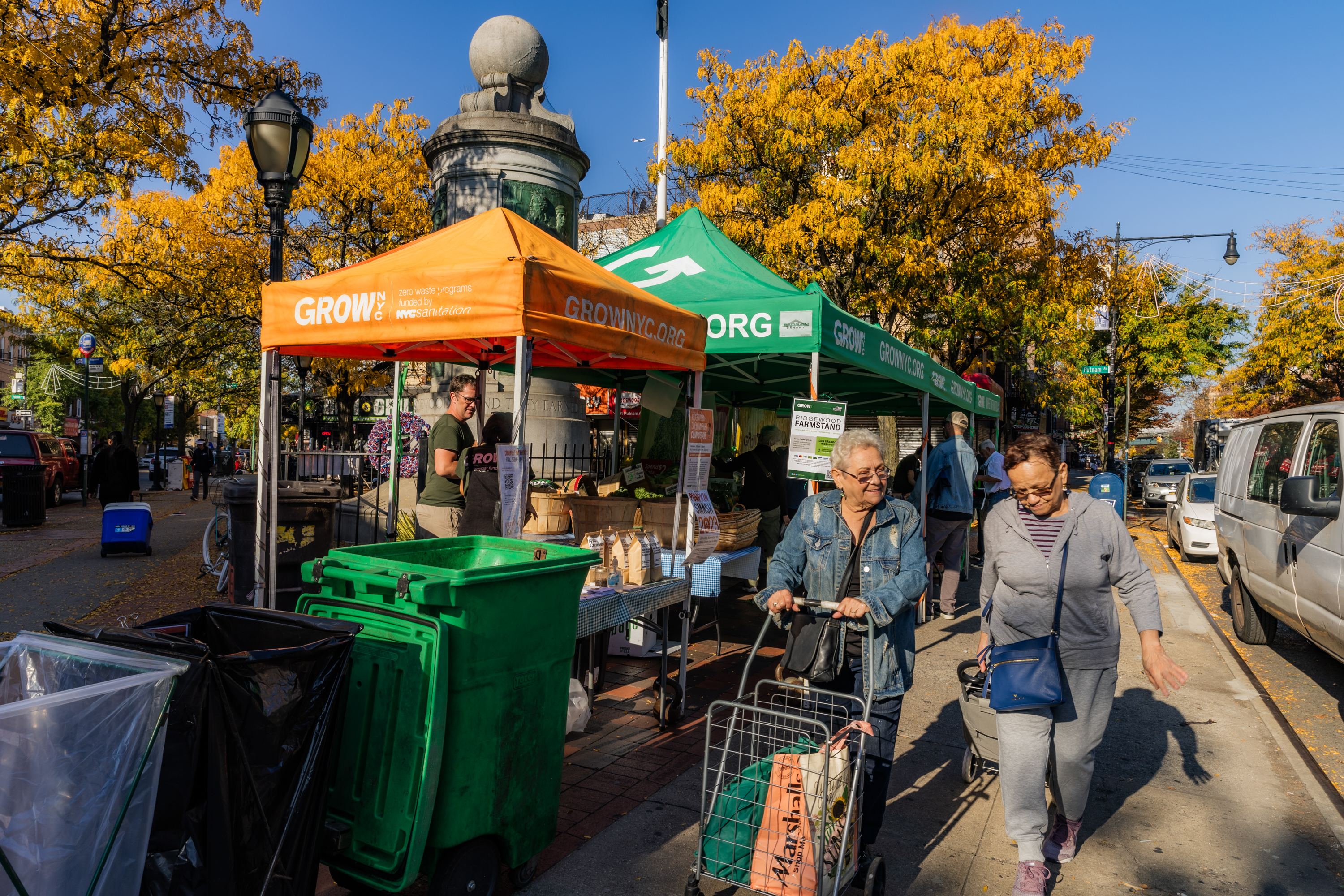
Greenmarket, the largest and most successful open-air farmers markets program in the country connects local farmers with city residents by delivering fresh healthy produce to all five boroughs. With 50 Greenmarkets located throughout the city, New Yorkers can purchase fresh fruit, vegetables, and other locally produced products straight from regional farmers. By directly connecting farmers and producers to New Yorkers, Greenmarket supports family farms, preserves farm land, delivers fresh healthy produce to those who need it most, and reduces the environmental effects that result from food traveling across the country or world. Greenmarket has set the standard for farmers markets for 30 years, and continues to grow and serve new communities.
Wholesale Greenmarket offers over 100 local and regional farm-fresh products including fruits, vegetables, herbs, and flowers at competitive wholesale prices and quantities. The Wholesale Greenmarket facilitates sales between wholesale buyers such as small grocers, institutions, restaurants, and distributors and small and medium sized growers from New York and adjacent states. After more than 30 years at the Bronx Terminal Market, the Wholesale Greenmarket is now located at the New Fulton Fish Market in Hunts Point, Bronx. The new location was organized with the assistance of the New York State Department of Agriculture and Markets.
The New Farmer Development Project (NFDP) identifies, educates, and supports immigrants with agricultural experience to become local producers and establish small farms in the region. By training the next generation of regional farmers, the NFDP is helping preserve local farmland and rural farm communities, strengthen farmers markets and regional food security, and expand public access to high-quality, locally-grown farm products.
Youthmarket is a network of 8 youth-run urban farm stands staffed by teens from the communities in which they are located and co-organized by GrowNYC and a local community group. Teens serve up healthy, local produce while learning entrepreneurial skills for future career choices. They are bringing healthy food to their communities, which are selected for their lack of access to fresh fruits and vegetables and their high prevalence of overweight, obesity,and diet-related health problems. In the process they create vibrant community hubs.
Office of Recycling Outreach and Education (OROE) works to improve the City’s recycling rate by educating residents about recycling and waste prevention, and working with landlords to make sure building recycling programs are adequate. Our free services include apartment building recycling audits, trainings for tenants and supers, community events centered on education and special collection programs for textiles, electronics and compost. Our five borough-wide coordinators work on a community-by-community basis to identify and address the specific challenges to recycling within a Community District. OROE's current intensive efforts target one-quarter of New York City's residents and focus on the neighborhoods of Washington Heights, Inwood, East Harlem, Central Harlem and Manhattan Public Housing; Williamsburg, Greenpoint, Bedford-Stuyvesant, Bushwick; Astoria, Long Island City, Jackson Heights, Corona, Jamaica; South Bronx; and all of Staten Island.
Training Student Organizers (TSO) creates the environmental leaders of the future though academically based service learning programs. TSO educates young people about the environmental consequences of their choices, teaches them to improve the environment in which they live, and increases their interest in environmental sciences and issues. Through TSOs hands-on programs, middle and high school students directly connect with and improve the urban ecosystem by planting trees in the watershed, building model green buildings, and identifying environmental hazards, including noise, in their communities.
Learn It, Grow It, Eat It is aimed at improving the health of young people through nutrition education and improved food access in their schools and communities. The project encourages young people to take control of their health on the cusp of adulthood through knowledge, choices and action. Learn It, Grow It, Eat It gives students nutrition information that goes beyond memorizing the USDA food pyramid; helps them make the connection between the environment and food consumption through hands-on gardening; and introduces healthy food choices that they can incorporate into their diet with in-school food preparation and offerings featuring Greenmarket produce.
Greenmarket Education Program connects city children with farmers and enables them to experience food as a joyful journey that starts with a seed and ends on their table. Elementary schoolchildren are introduced to the fresh,locally grown food system at the Union Square Farmers Market. Children receive hands-on experience and supplemental materials that build an understanding of how food choices impact their bodies, the environment and their communities. Last year we launched a school-visit program that brings farmers and Greenmarket staff to NYC classrooms, and developed curricula and materials to enhance the experience.
The Open Space Greening Program (OSG) empowers people in neighborhoods throughout the city to create, manage and sustain community gardens and park/playgrounds. OSG provides best practices workshops, services, tools, donated plant material, and open space planning/mapping information and other services. Grow Truck provides tools, donated supplies, plants and horticultural advice and assistance to gardening groups all over New York City. The Plant-A-Lot (PAL) Project gives substantial material and technical assistance to several new gardens each year and helps the 45 existing gardens created in prior years.